
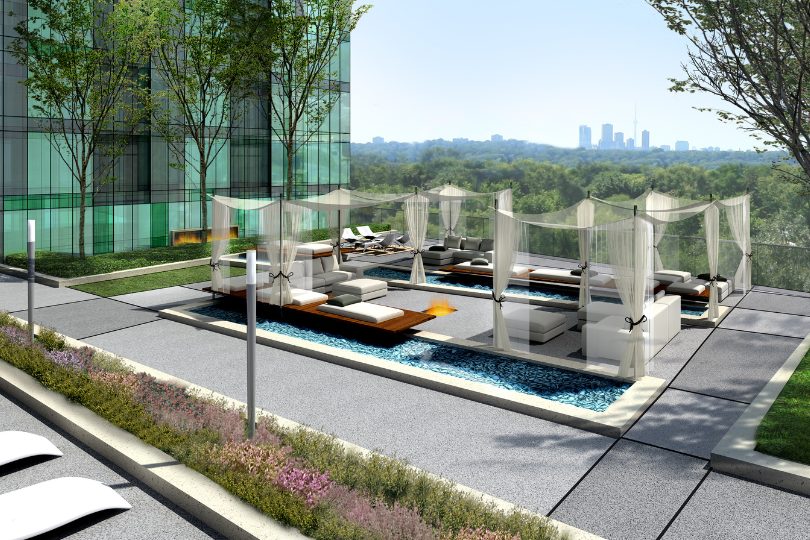
The rooftop terrace at BAZIS’s Emerald Park
Step onto almost any downtown Toronto balcony and the view is unmistakable: glass towers, concrete slabs, steel railings, and very little green in between. In a city that continues to grow upward, access to nature can feel limited, especially for people living dozens of floors above the street.
That’s one reason vertical gardens are getting more attention in Toronto condo communities. These living walls respond to a simple desire: to bring more greenery into everyday spaces, even when traditional landscaping isn’t possible. In a city growing up instead of out, vertical gardens in Toronto are becoming a practical way to reconnect residents with nature. While they may look like a design trend on the surface, vertical gardens are increasingly part of a broader conversation about wellness, sustainability, and how buildings feel to live in.
Why Vertical Gardens in Toronto Condos Are Gaining Momentum
Condo living comes with many benefits – location, convenience, amenities – but outdoor space is often at a premium. Rooftop terraces and podium gardens help, but they can only do so much. Vertical gardens offer another option by transforming underused wall space into living features.
In newer buildings, these green walls are showing up in lobbies, amenity areas, fitness rooms, and shared workspaces. Instead of adding more square footage, they rethink how existing space is used. The result is often subtle but impactful. A lobby with a living wall feels warmer and more welcoming than one defined by stone and drywall alone.
That emotional response matters. Spaces that feel calm, cared for, and intentional tend to be the spaces people remember – and use.
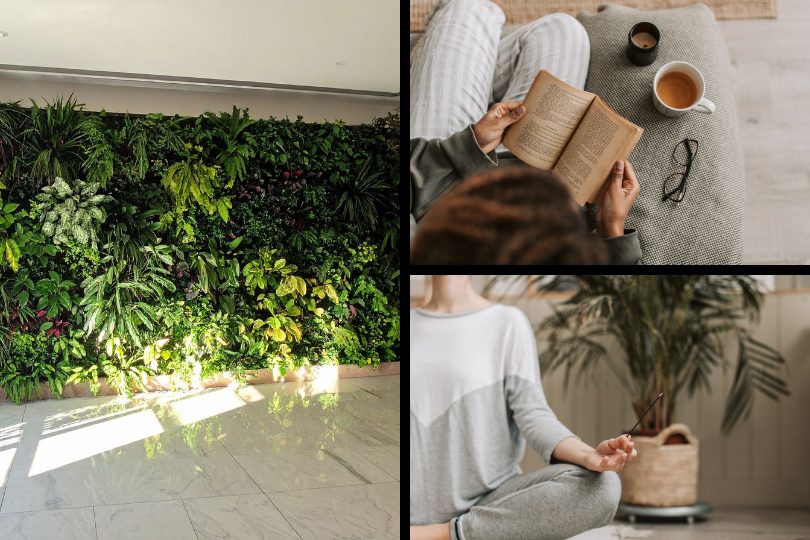
The Practical Benefits Behind the Aesthetic
Beyond how they look, vertical gardens can offer real functional value in shared condo spaces. Depending on design and plant selection, benefits may include:
- Improved air quality in common areas through natural filtering
- Softer acoustics, as plants help absorb sound
- Visual interest that differentiates a building in a competitive market
- A more relaxed atmosphere in high-traffic indoor spaces
For residents and prospective buyers, these details often signal something larger: that a building values livability, sustainability, and long-term thinking, and understands the growing role of vertical gardens in Toronto’s high-rise neighbourhoods.
Where Vertical Gardens Tend to Work Best
Not every wall is a good candidate for a vertical garden, but certain areas consistently stand out as strong fits within condo buildings:
- Lobby feature walls that create a memorable first impression
- Fitness or yoga rooms where a natural backdrop enhances the experience
- Co-working lounges and study areas where residents spend extended time indoors
- Outdoor terraces where wind or space limits traditional planter
In many cases, vertical gardens replace purely decorative feature walls. They still contribute to the building’s design language, but now they also improve comfort and usability, reinforcing how vertical gardens in Toronto can make dense buildings feel more welcoming.
Technology Is Changing How Green Walls Function
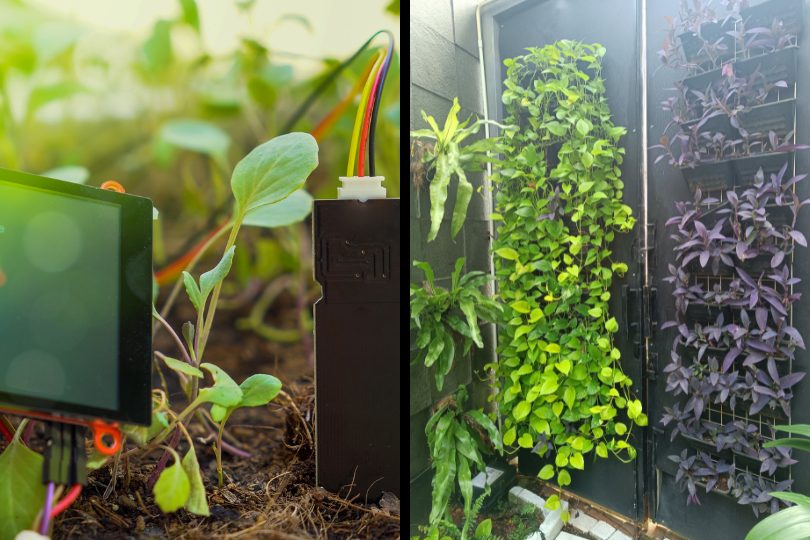
Early vertical garden systems often required hands-on maintenance, which made some condo boards hesitant. Today, technology has changed that equation. Modern systems commonly include automated irrigation, moisture sensors, and plant selections suited to indoor lighting conditions.
This has made green walls more predictable and easier to manage. With the right planning and maintenance approach, they can function as reliable building features rather than high-maintenance experiments.
Wellness, Community, and Everyday Use
As cities become denser, the role of shared indoor spaces has evolved. Residents are no longer just passing through amenity areas; they’re working, reading, meeting neighbours, and spending real time there.
Green elements can play an important role in how those spaces are used. A vertical garden paired with natural light and comfortable seating can transform an overlooked corner into a place people actually gravitate toward. Residents often describe these areas as calmer and more inviting, which naturally encourages longer stays and more interaction.
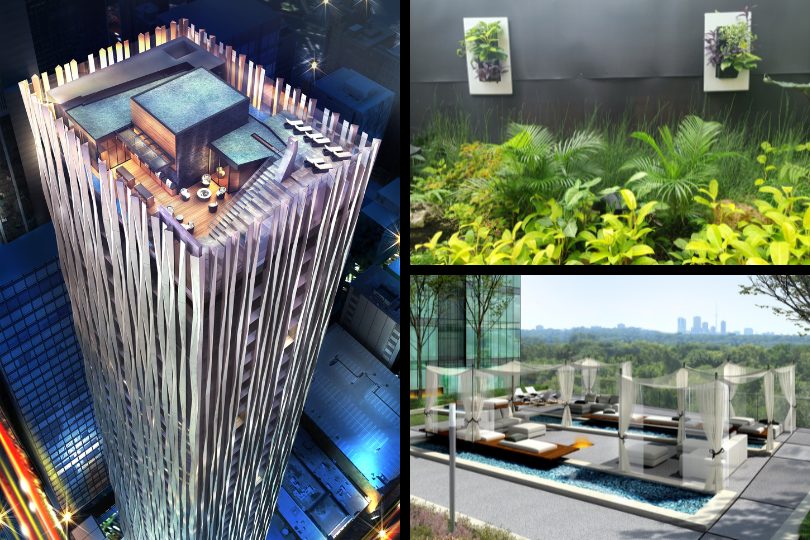
BAZIS’s 1 Yorkville rooftop green space (left); rooftop terrace at BAZIS’s Emerald Park (bottom right)
Learning from Green Spaces Already in the City
While vertical gardens are still emerging, Toronto has seen growing interest in incorporating greenery into high-density residential buildings in other ways. Rooftop gardens, in particular, have become a valued amenity when thoughtfully designed.
At BAZIS, projects like Emerald Park and 1 Yorkville have demonstrated how well-planned rooftop green spaces can enhance the resident experience, offering moments of nature above the city and creating places people genuinely enjoy spending time. These projects reflect the same underlying principle that drives interest in vertical gardens: even in dense urban environments, access to greenery matters.
Looking Ahead
Toronto’s condo market continues to evolve, and expectations around amenities are changing with it. Features that support wellness, sustainability, and everyday comfort are becoming increasingly important, not just as selling points, but as parts of a building that residents value long after move-in day.
Vertical gardens sit at the intersection of design and livability. Whether used as a bold architectural statement or a subtle enhancement to shared spaces, they reflect a broader shift toward more thoughtful, human-centred buildings. As awareness grows, vertical gardens in Toronto are likely to move from ‘nice-to-have’ features to expected parts of forward-thinking condo design
What are your thoughts on vertical gardens? Is this something you’d like to see more of in Toronto? Connect with BAZIS on social media (Facebook, X, or Instagram) and let us know!